High demand for fall calls Seeking beta testers for object storage testing 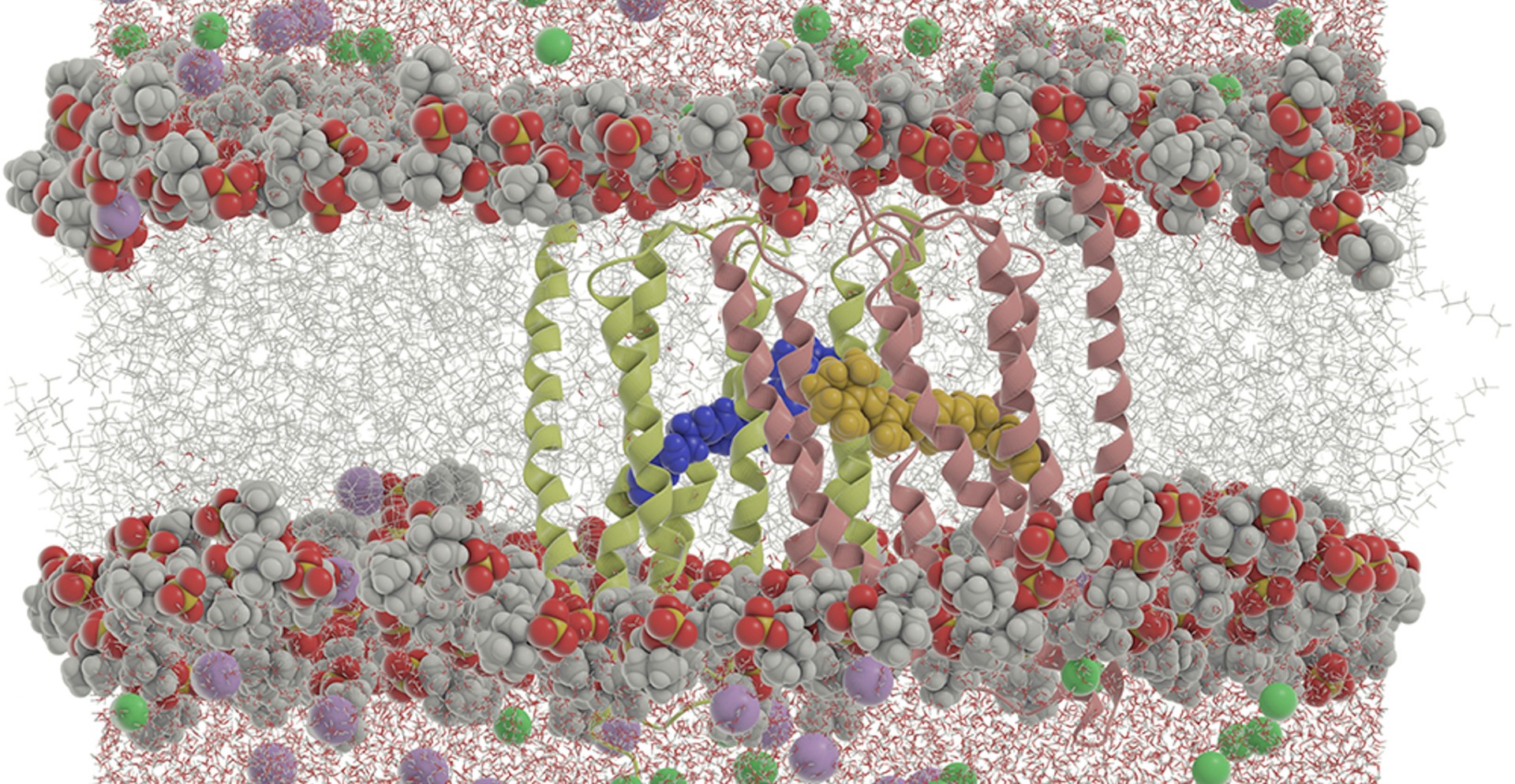 Demand is accelerating Erik Lindahl, NAISS director Thanks to everyone who joined the NAISS User Forum. Your feedback helps set our priorities. Special thanks to Professor Marie Skepö for her excellent work shaping the User Support Advisory Committee; get in touch if you’d like to join USAC! Uptake of the GPU resources on Arrhenius has been strong. Your work porting codes and adopting new libraries is paying off: more science per allocation, and freed CPU capacity for workloads with no GPU alternative. Thank you. Demand is accelerating fast. Despite much higher performance, requests already far exceed the available time. This strengthens the case for continued national investment, but for now the allocations committee must prioritize carefully. The aim is to give as many projects as possible meaningful allocations while following the Swedish Research Council’s principle of prioritizing the strongest research. You can help by storing only data you actively use and requesting only what you realistically need (fair-share lets you exceed your quota). And remember that the new systems are much faster, so fewer hours often still means higher throughput. We’re building on this momentum with hackathons, workshops and support for EuroHPC applications. The sensitive-data partition of Arrhenius comes online in November, the AI factory supercomputer arrives in 2027, and we’re working to secure funding for further expansion. News High demand in the fall NAISS Large and LUMI Sweden rounds The NAISS Large Fall 2026 and LUMI Sweden Fall 2026 calls closed on 16 October, and both rounds were heavily oversubscribed. NAISS Large received 75 proposals. That is up from 46 in spring 2026 and 52 in fall 2025, making it the largest round since compute and storage were merged into a single Large call. Arrhenius GPU is the most contested resource: the time requested is about three times what is available. Arrhenius CPU is oversubscribed by around 50%, disk storage by more than twice capacity, and flash storage by almost 20%. Requests for the sensitive data resources (Arrhenius SENS) stayed within capacity. LUMI Sweden received 27 proposals, more than double last year’s 11 and the highest number since the round started in 2021. Applicants requested about three times the available LUMI-C capacity and twice the available LUMI-G capacity. Storage requests came to about two-thirds of what is available. Both calls are now under review. Applicants will be notified of the results by email in November, and awarded projects begin on 1 January 2027. Read more ›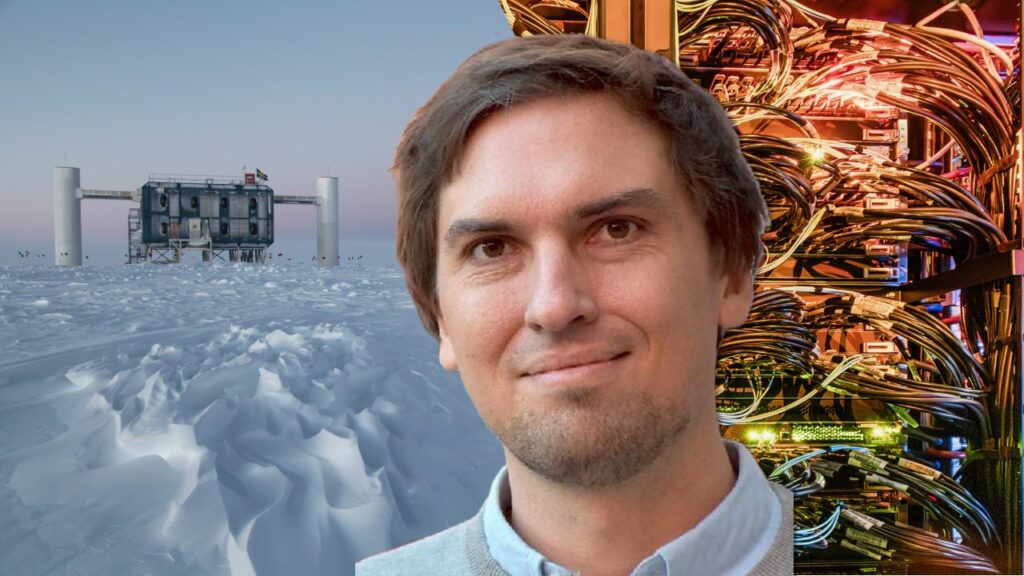 Beyond the Nobel Prize: Simulating the next generation of IceCube Francis Halzen, who proposed the IceCube Neutrino Observatory at the South Pole, has been awarded the 2026 Nobel Prize in Physics. Work on its successor, IceCube-Gen2, is already under way, and NAISS resources are helping shape it. Christian Glaser, Associate Professor at Uppsala University, is optimising the design of IceCube-Gen2’s radio detector. Because the detector must be designed before anything is built in the Antarctic ice, his team relies on large-scale Monte Carlo simulations of neutrino interactions, radio emission and signal propagation through the ice. They also used the simulated data to train a deep neural network that reconstructs the energy and direction of cosmic neutrinos. Read more ›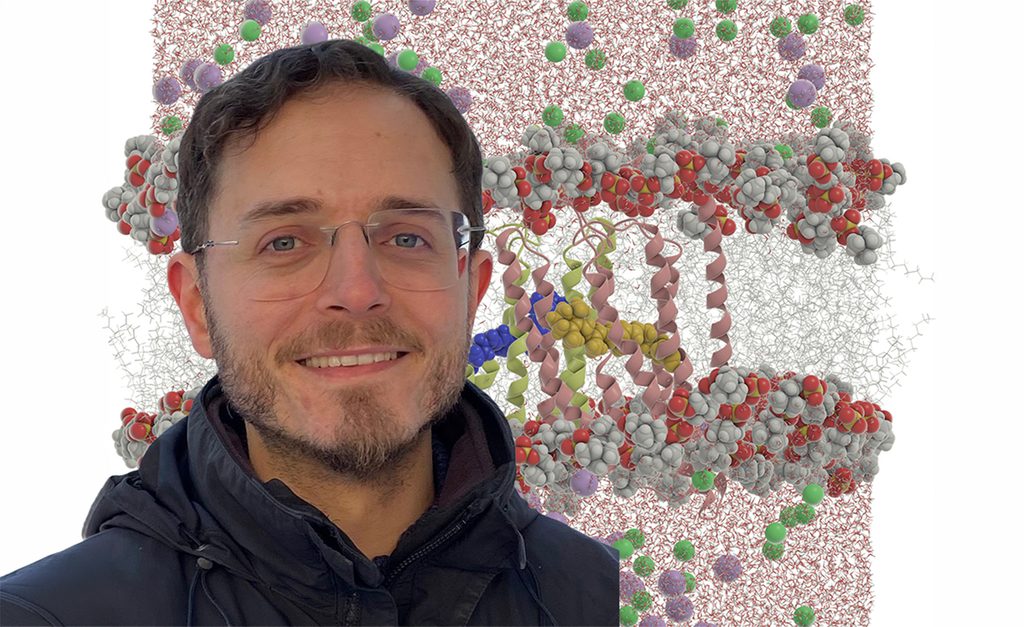 Beyond the Nobel Prize: Shining a light on the protein that revolutionised brain research The 2026 Nobel Prize in Medicine recognises optogenetics, where the light-sensitive protein Channelrhodopsin-2 is used to control nerve cells with light. But what happens inside the protein when the light switches on is still not fully understood. At KTH, Marie Skłodowska-Curie Postdoctoral Fellow David Carrasco de Busturia is finding out. Using QM/MM simulations on Dardel, he models the protein and its environment, around a quarter of a million atoms, across timescales from femtoseconds to microseconds. “To simulate the steps the system goes through when light hits, I really need a supercomputer,” he says. Object storage pilot open to early adopters In October, NAISS took its new S3 object storage system into pilot production. The service is designed to offer scalable long-term storage co-located with the supercomputers, and NAISS is now looking for technically oriented early adopters to help test it. The storage has an S3 interface and fast network access. It runs on a single site and has no backup. Once in regular operation, the service will be fee-based. NAISS plans to offer the service more broadly once it has been verified to perform well and the contractual and administrative framework for allocations and fees is in place. The longer-term aim is to support sensitive data as well. To learn more or register interest as an early adopter, contact Stefan Fleischmann at stefan@naiss.se. Events Training 9–13 Nov 2026 This is an introduction to version control, with a strong focus on Git. Some of the main concepts, like repositories, commits, trees, branches, and merges will be covered, as will many of the basic commands, like clone, add, push, pull, commit, and fork. Online Event page ›Training 16–20 Nov 2026 Using Python in an HPC environment This workshop gives a brief but comprehensive introduction to using Python in a high-performance computing (HPC) environment. It covers a wide range of levels in using Python. Online Event page ›Training 2–4 Dec 2026 NAISS Introduction training days The NAISS introduction training days offers five modules distributed over 3 days. The course modules are particularly aimed at new users of the infrastructure. They are also suitable for experienced users, wishing to deepen their understanding of the workings of the systems. Online Event page ›Training 8–9 Dec 2026 ML for Scientific Data: From Classical ML to Deep Learning TLearn how to explore and visualise real-world scientific datasets in Python. The event shows how to extract features from raw data as well as training and evaluating a Random Forest classifier. We will build, train and evaluate a CNN for image segmentation and submit ML training jobs to an HPC cluster with Slurm. Online Event page ›Training 10 Dec 2026 Running Deep Learning Workloads on NAISS Systems, 10 December, 2026 The focus of the event will be on the differences when running Deep Learning frameworks such as PyTorch or TensorFlow on HPC systems. The event will also look into how to get the best performance for the system. Online Event page ›Of interest
You are receiving this email because you are a NAISS user or stakeholder. Unsubscribe |
